
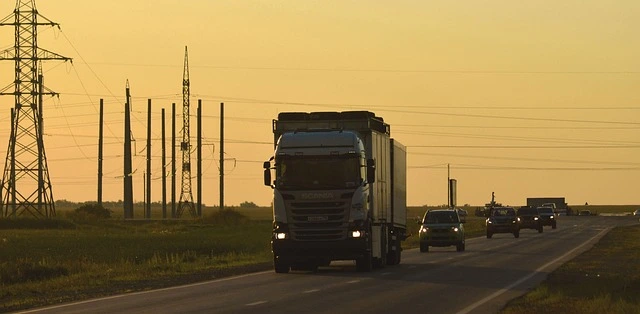
We assist residents and non-residents with establishing and licensing transport companies in Lithuania from beginning to end. Our support can include company registration, preparation of the licensing documents, assistance with appointing a qualified transport manager and coordination of the application with the responsible Lithuanian authorities.
For entrepreneurs who want to begin operating sooner, we can also offer a prepared Lithuanian company and complete the remaining licensing procedures. Prices for company registration and transport licensing support start from €3,000. Contact us to receive an individual assessment based on your intended fleet, routes and operating model.
Email: info@startbusiness.lt
Phone (WhatsApp, Viber, Telegram or a simple phone call): +37060514208
Transport company registration in Lithuania
Lithuania is an important base for international road transport businesses operating within the European Union. Its geographical location, established logistics sector and access to the EU road transport market make it particularly suitable for international freight operations.
However, registering a Lithuanian company does not automatically grant the right to carry goods commercially. Road transport licensing is a separate regulatory procedure. The applicant must demonstrate that the company meets the requirements relating to establishment, financial standing, professional competence and good repute.
Most delays arise before the application reaches the Lithuanian Transport Safety Administration. Problems usually occur because the company has not appointed a suitable transport manager, cannot demonstrate sufficient financial standing or does not have a genuine operational establishment in Lithuania.
This guide explains how to obtain a transport license in Lithuania, what documents are required, how much the process may cost and what foreign founders should prepare before submitting an application.
What does a Lithuanian transport license allow you to do?
There is no single transport license covering every type of commercial road transport activity. The required authorization depends on what will be transported, the routes used and the maximum permissible mass of the vehicles.
Separate licensing rules apply to freight and passenger transport. The intended activity must therefore be clearly defined before the company, office, transport manager and financial documentation are arranged.
For commercial freight transport, the Lithuanian Transport Safety Administration currently issues several types of licenses.
A Community licence for vehicles with a maximum permissible mass exceeding 3.5 tonnes allows a Lithuanian carrier to transport goods for hire or reward on both Lithuanian and international routes.
A separate Community licence applies when international freight transport is performed with vehicles or vehicle combinations whose maximum permissible mass exceeds 2.5 tonnes but does not exceed 3.5 tonnes.
For commercial freight transport performed exclusively within Lithuania using vehicles exceeding 3.5 tonnes, a national road haulage license may be required.
This distinction is important. The frequently repeated claim that transport licensing only begins at 3.5 tonnes is no longer correct for international freight operations. Since 21 May 2022, the Community licence requirement also covers international carriage and cabotage performed with vehicles exceeding 2.5 tonnes.
Certain activities remain exempt. For example, a license may not be required for specific own-account transport operations when all legal conditions are satisfied. Exemptions may also apply to the transport of damaged vehicles, universal postal services and certain emergency medical goods. Every exemption should be checked against the actual operating model rather than assumed from the vehicle’s weight alone.
The Community license for international freight transport
The Community licence is the principal authorization required by Lithuanian carriers performing international commercial freight transport within the EU market.
It is issued under Regulation (EC) No 1072/2009, which establishes common rules for access to the international road haulage market.
The original Community licence must be retained by the transport company. A certified copy must be carried in every vehicle operating under the licence. The document must be presented when requested by an authorized inspection officer.
The licence belongs to the carrier and cannot be transferred to another company. If a company is sold, reorganized or otherwise materially changed, the effect of those changes on the licence must be evaluated separately.
The Community licence gives the carrier access to international freight routes covered by EU and related agreements. It does not remove the obligation to comply with national road transport rules in every country through which the vehicle travels.
Cabotage restrictions, driver posting requirements, road charges, vehicle standards, environmental zones, driving times and rest periods continue to apply.
Which authority issues transport licenses in Lithuania?
The main authority responsible for road transport licensing in Lithuania is the Lithuanian Transport Safety Administration, commonly referred to as LTSA.
LTSA evaluates applications, issues Community and national transport licenses, produces certified copies for vehicles and supervises carriers after authorization has been granted.
Its role does not end when the licence is issued. A transport company must continue to satisfy the licensing requirements throughout its operations. LTSA can carry out inspections, request supporting documents and review whether the company continues to have an effective establishment, sufficient financial standing, a qualified transport manager and an acceptable compliance record.
Licenses for certain local passenger transport activities may fall within the competence of municipal authorities. International freight carriers, however, will normally deal directly with LTSA.
The four main requirements for a transport license in Lithuania
Lithuanian licensing rules implement the conditions established by Regulation (EC) No 1071/2009.
A carrier must satisfy four continuing requirements:
- An effective and stable establishment
- Good repute
- Appropriate financial standing
- Professional competence
These are not optional supporting criteria. The applicant must satisfy all four before a transport license can be issued.
An effective and stable establishment in Lithuania
A Lithuanian registration address alone is not sufficient for a licensed transport business.
The carrier must have a genuine establishment in Lithuania from which the transport activity can be administered. The premises must be owned or controlled on a lawful basis, such as through a valid lease agreement.
The establishment should be suitable for retaining and accessing the company’s principal business documentation. This may include accounting records, employment documents, transport agreements, vehicle information and records relating to drivers’ working and rest periods.
The company must also conduct its transport activities effectively and continuously with the necessary administrative and technical resources.
This does not necessarily mean that every function must be performed from a large office. The size and arrangement of the premises should correspond to the actual nature and scale of the company’s operations. Nevertheless, an address used only to receive mail, without genuine transport management or access to the required records, may not satisfy the establishment requirement.
A foreign founder should therefore arrange the operational premises and management structure before submitting the licensing application.
Good repute
The good-repute requirement applies to the carrier, the company’s director and the appointed transport manager.
LTSA may consider criminal convictions, administrative sanctions and serious infringements committed in Lithuania or abroad. Relevant violations may relate to commercial law, insolvency, employment conditions, road safety, professional liability, human trafficking, drug trafficking and transport regulation.
Serious breaches of EU transport rules can also affect good repute. These include infringements involving:
- Drivers’ working, driving and rest periods
- Tachograph installation and use
- Vehicle weights and dimensions
- Driver qualifications
- Vehicle roadworthiness
- Access to the international road haulage market
- Dangerous-goods transport
- Driving licenses and professional competence
Good repute is not examined only when the first application is filed. Repeated or particularly serious infringements committed after licensing may lead to further regulatory procedures, suspension or withdrawal of the authorization.
Foreign directors and transport managers may be asked to provide criminal-record certificates or equivalent documents from the countries in which they have previously resided.
Appropriate financial standing
A transport company must demonstrate that it has sufficient financial resources to operate its fleet and meet its obligations throughout the accounting year.
The required amount depends on the number and weight category of the vehicles used.
For a company operating vehicles or vehicle combinations exceeding 3.5 tonnes, the general financial-standing requirement is:
- €9,000 for the first vehicle
- €5,000 for each additional vehicle
If the company uses only vehicles or combinations exceeding 2.5 tonnes but not exceeding 3.5 tonnes, the lower thresholds apply:
- €1,800 for the first vehicle
- €900 for each additional vehicle
A mixed fleet is calculated differently. The company must generally demonstrate €9,000 for the first vehicle exceeding 3.5 tonnes, €5,000 for every additional vehicle exceeding 3.5 tonnes and €900 for each additional vehicle falling within the 2.5–3.5 tonne category.
For example, a carrier operating three heavy goods vehicles would generally need to demonstrate financial standing of €19,000:
€9,000 for the first vehicle, plus €5,000 for each of the two additional vehicles.
A company operating only three international light commercial vehicles between 2.5 and 3.5 tonnes would generally need to demonstrate €3,600:
€1,800 for the first vehicle, plus €900 for each of the two additional vehicles.
Financial standing must not be confused with the UAB’s minimum share capital. They are separate legal requirements.
The company’s share capital is determined by Lithuanian company law. The transport licensing requirement concerns the carrier’s available capital and reserves or another form of financial security accepted under the applicable rules.
For an established company, financial standing is normally evaluated using its annual financial statements. EU rules also permit a competent authority to accept or require financial security such as a bank guarantee or insurance under specified conditions.
A newly registered company may not yet have completed annual financial statements. The acceptable method of demonstrating its financial standing should therefore be confirmed and arranged before the licence application is submitted.
The carrier must continue to satisfy the relevant financial threshold after the licence has been issued. Adding vehicles to the fleet may require the company to increase its available financial resources.
Professional competence and the transport manager
Every licensed carrier must have at least one transport manager who possesses the required professional competence.
Professional competence is normally demonstrated through a valid Certificate of Professional Competence, commonly known as a CPC. The qualification must be recognized for the type of transport activity performed by the company.
The transport manager can be appointed solely to appear in the licence application, but the person also have effectively and continuously manage the company’s transport operations.
The responsibilities commonly include:
- Managing vehicle use and maintenance
- Reviewing transport agreements and operational documents
- Allocating vehicles and assignments to drivers
- Monitoring driving and rest periods
- Supervising safety procedures
- Ensuring compliance with transport regulations
- Maintaining operational and regulatory records
The transport manager may be the company director, an employee, an owner, a shareholder or another person with a genuine link to the business.
It is also possible to appoint an external transport manager under a service agreement. The contract must clearly describe the manager’s responsibilities and authority. The person must remain genuinely involved in the carrier’s activities and cannot merely rent out their CPC certificate.
According to LTSA guidance, one transport manager may manage the transport activities of no more than two separate Lithuanian carriers using a combined total of no more than 30 vehicles with licence copies. When the person manages only one carrier, the number of covered vehicles is not limited by this particular rule.
Finding an appropriate transport manager is often one of the longest parts of the licensing process. Foreign founders should begin this search while the company is being established rather than waiting until every other document has been prepared.
Does the transport manager have to live in Lithuania?
Lithuanian citizenship is not required to become a transport manager. Lithuanian residence is also not necessarily required.
However, the transport manager must meet the applicable EU residence requirement, hold a recognized CPC and be capable of effectively and continuously managing the company’s Lithuanian transport activity. A foreign CPC certificate may be recognized if it satisfies the applicable European rules. The document and the manager’s background should nevertheless be reviewed before the appointment is finalized.
The company director can also be a non-resident. The important issue is not the nationality of the director but whether the carrier itself has a genuine and stable establishment in Lithuania and is properly managed.
How to obtain a transport license in Lithuania
For most foreign investors, the practical process begins by establishing a Lithuanian UAB.
The licensing work should be planned at the same time as the company formation. Treating registration and licensing as completely separate projects frequently results in unnecessary delays.
The usual process includes the following stages.
1. Define the intended transport activity
The founder must decide whether the company will transport freight or passengers, whether it will operate domestically or internationally and which vehicle categories will be used.
This determines the required licence, financial-standing threshold, documentation and operational obligations.
2. Register the Lithuanian company
A Lithuanian UAB is the usual structure for foreign entrepreneurs establishing a commercial freight carrier.
The company needs a Lithuanian registered address, shareholders, a director, incorporation documents and the required share capital. Its business activities should include the relevant road freight transport activity.
3. Arrange the actual establishment
The company must obtain suitable premises in Lithuania and ensure that its principal business and compliance records can be maintained there.
The office and management arrangements should reflect genuine operations rather than provide only a nominal registration address.
4. Appoint a qualified transport manager
The company must enter into an appropriate legal relationship with a CPC-qualified transport manager.
The person’s certificate, reputation, residence status, responsibilities and capacity to manage the proposed fleet must be verified.
5. Prepare evidence of financial standing
The company must demonstrate financial capacity corresponding to the planned number and type of vehicles.
The method of proof should be determined before filing, particularly when the company is newly established and does not yet have annual financial statements.
6. Prepare the application documents
The complete licensing package is assembled, reviewed and submitted to LTSA. Any foreign-language documents may need to be translated or certified.
7. Pay the state fees
According to the current LTSA guidance, the state fee for issuing or renewing a transport license is €57. The fee for issuing or renewing each licence copy is €43.
These are only the official state charges. They do not include company registration, office rental, the transport manager, accounting, financial guarantees, translations or professional assistance.
8. LTSA reviews the application
LTSA evaluates the company’s establishment, good repute, financial standing and professional competence.
If additional information is requested, the review may not be completed until the missing or corrected documents are provided.
9. The licence and certified copies are issued
When the application is approved, the company receives the relevant licence. A certified copy must be obtained for every vehicle operating under the Community licence.
The original Community licence remains with the company, while the certified copy must accompany the vehicle.
Documents required for the application
The precise document package depends on the licence type, company structure and circumstances of the relevant individuals. A typical application may require:
- The completed application form
- Company registration details
- Information about the shareholders and director
- Documents confirming the company’s Lithuanian establishment
- A lease agreement or proof of ownership of the premises
- Financial statements, a guarantee or other accepted financial evidence
- The transport manager’s CPC certificate
- An employment or service agreement with the transport manager
- Documents supporting the good repute of relevant individuals
- Vehicle registration, ownership, lease or use documents
- Confirmation of payment of the state fees
- Certified translations of relevant foreign documents
The application should be reviewed as a single compliance package. It is not enough for each document to exist separately; the documents must describe a consistent and credible operating structure.
For example, the office arrangement, transport manager’s responsibilities, proposed fleet and financial documentation should all correspond to the same business model.
How long does it take to obtain a transport license in Lithuania?
LTSA states that a licence, its copies or a written reasoned refusal must generally be issued within 20 working days after all required documents have been received. This period should not be confused with the total project duration.
Before a complete application can be filed, the founder may still need to register the company, arrange the office, appoint a transport manager, prepare financial evidence and collect documents from other countries.
The preparation stage often takes longer than the formal LTSA assessment. A straightforward case with a prepared transport manager, suitable premises and complete financial evidence can move efficiently. A case that begins without these elements can take several weeks or months to prepare.
The main factors affecting the timeline are:
- How quickly the Lithuanian company is established
- Whether a suitable transport manager has already been identified
- Whether the financial-standing evidence is acceptable
- Whether foreign certificates require translation or legalization
- Whether the company already has access to vehicles
- Whether LTSA requests additional information
Applications should be submitted only after the complete file has been checked. Filing an incomplete application rarely saves time.
How much does a transport license in Lithuania cost?
The state fee represents only a small part of the total budget. The full cost may include:
Company registration
Foreign founders will normally need to establish a Lithuanian UAB or acquire a prepared company suitable for the intended activity.
Transport manager
The transport manager may be employed by the company or appointed under an external service agreement. The cost depends on the responsibilities, fleet size and scope of the operation.
Financial-standing documentation
The business must maintain the required financial capacity. Additional costs may arise if a bank guarantee, insurance or professional financial documentation is needed.
Operational premises
The company needs a genuine establishment in Lithuania. The cost depends on the office, management centre and any operational facilities required.
Accounting and payroll
A licensed carrier must maintain proper accounting records and may need payroll, VAT, corporate tax and annual reporting services.
Vehicles and fleet administration
The company must budget for purchasing or leasing vehicles, insurance, registration, roadworthiness, maintenance, fuel, road charges and licence copies.
Professional and translation services
Foreign documents may need to be translated, certified, apostilled or legalized. Professional fees may also arise for company formation and licensing assistance.
Our company registration and transport licensing support starts from €3,000. The final price depends on whether the founder already has a company, transport manager, operational office, financial evidence and vehicles.
Common mistakes that delay transport license applications
A large proportion of unsuccessful or delayed applications involve the same preventable issues.
Starting without a transport manager
A carrier cannot satisfy the professional-competence requirement without a properly appointed CPC-qualified transport manager.
Searching for this person only after the company and the remaining documents are ready can significantly extend the project.
Using a nominal registration address
A registered address is necessary for company formation, but licensed transport activity requires an effective and stable establishment.
If the company cannot demonstrate genuine management, access to records and operational substance in Lithuania, the establishment requirement may not be satisfied.
Misunderstanding the financial requirement
The €9,000 and €5,000 thresholds are not simply additional UAB share capital. They relate to the continuing financial standing of the transport undertaking.
The evidence must be provided in an acceptable format and must cover the actual planned fleet.
Applying for the wrong licence
The required authorization depends on whether the company carries freight or passengers, operates domestically or internationally and uses vehicles above 2.5 or 3.5 tonnes.
An application prepared for the wrong activity cannot support the company’s real operations.
Treating the transport manager as a nominal appointment
The transport manager must actually perform the responsibilities stated in the relevant agreement. Appointing a CPC holder who has no involvement in the business creates a serious compliance risk.
Underestimating post-licence obligations
The company must continue to meet all four licensing conditions. Financial standing, establishment, professional competence and good repute are not examined only once.
Does a Lithuanian transport license cover the whole European Union?
A Lithuanian Community licence allows the carrier to perform international commercial freight transport within the scope of EU road transport rules.
It removes the need to obtain a separate general road haulage license in every EU Member State through which the carrier operates. The licence is also relevant to operations within the European Economic Area, subject to the applicable legal framework.
This does not mean that one licence creates an unrestricted right to perform every transport operation throughout Europe. The carrier must still comply with cabotage restrictions, driver posting requirements, local traffic rules, environmental requirements, road charges, vehicle standards and social legislation.
Routes involving non-EU countries may require additional permits or may be governed by bilateral or multilateral agreements. The applicable rules depend on the complete journey, including the countries of loading, transit and unloading.
The Community licence should therefore be understood as authorization to access the regulated EU road haulage market, not as an exemption from all other transport obligations.
Driving times, rest periods and tachograph requirements
Drivers operating under a Lithuanian transport license must comply with the driving-time and rest-period rules applicable to their routes and vehicles.
Under EU rules, the standard daily driving period must not exceed nine hours. It may be extended to ten hours no more than twice during a week.
The weekly driving limit is 56 hours, while the total driving time during two consecutive weeks cannot exceed 90 hours.
After no more than four and a half hours of driving, the driver must take a break of at least 45 minutes. Subject to the applicable conditions, the break can be divided into a 15-minute period followed by a 30-minute period.
The regular daily rest period is at least 11 hours. It may be reduced to nine hours no more than three times between two weekly rest periods.
The regular weekly rest period is at least 45 consecutive hours. A reduced weekly rest of at least 24 hours may be used in the circumstances permitted by the regulations, provided that the reduction is compensated correctly.
Compliance is monitored using tachographs, driver cards and company records.
A major change entered into force on 1 July 2026. Vehicles or vehicle combinations exceeding 2.5 tonnes but not exceeding 3.5 tonnes must now use a second-generation smart tachograph when performing international commercial freight transport or cabotage.
The drivers of these vehicles are also subject to the EU driving-time and rest-period rules. The change does not generally apply to vehicles used exclusively for domestic operations in Lithuania or to qualifying own-account and non-commercial transport.
According to LTSA’s 2026 guidance, tachograph data must be downloaded at least every 90 days, while driver-card data must be downloaded at least every 28 days.
The transport manager should establish a monitoring system before the first commercial journey. Drivers’ hours should not be managed only after an inspection or infringement has occurred.
Planning the transport business correctly
A transport license application should be based on a clear and realistic operating model. The founders should decide whether the company will own or lease its vehicles, work with employed drivers, use subcontractors or combine several methods.
The corporate and operational structure should cover:
- Ownership and management of the Lithuanian company
- Appointment and authority of the transport manager
- Location of the operational establishment
- Vehicle ownership or leasing
- Driver employment and payroll
- Transport-document management
- Tachograph monitoring
- Vehicle maintenance
- Financial-standing requirements
- Procedures for adding vehicles
- Reporting and accounting
- Planned routes and markets
Decisions made during company formation can affect the licensing process. It is therefore more efficient to coordinate the company, office, transport manager, fleet and financial documentation from the beginning.
Correcting an unsuitable structure after operations have begun is usually more expensive and disruptive.
Final considerations
Obtaining a transport license in Lithuania is a structured regulatory process. The company must have a genuine establishment, maintain good repute, demonstrate sufficient financial standing and appoint a professionally competent transport manager.
The formal LTSA review is generally manageable when the complete documentation has been prepared correctly. Most delays occur before filing because one of the central requirements has not yet been resolved.
Foreign founders should pay particular attention to the transport manager, operational premises and financial-standing evidence. These elements should be developed together with the company-registration process rather than added afterwards.
We can assist with registering the Lithuanian company, arranging the required corporate documents, appointing a transport manager and preparing the licensing application. A prepared Lithuanian company may also be available when the founder wants to shorten the company-formation stage.
Contact us to discuss the intended fleet, routes and licensing timetable. Our company registration and transport licensing services start from €3,000.
Frequently Asked Questions
Can a non-resident obtain a transport license in Lithuania?
Yes. A foreign entrepreneur can own and manage a Lithuanian transport company. The carrier itself must have an effective and stable establishment in Lithuania and satisfy the requirements relating to good repute, financial standing and professional competence.
For most non-resident founders, the process begins with registering or acquiring a Lithuanian UAB.
How much financial capacity does a transport company need?
For vehicles exceeding 3.5 tonnes, the company generally needs €9,000 for the first vehicle and €5,000 for every additional vehicle.
When the company operates only vehicles exceeding 2.5 tonnes but not exceeding 3.5 tonnes, the thresholds are €1,800 for the first vehicle and €900 for each additional vehicle.
These amounts relate to the carrier’s financial standing and should not be confused with the UAB’s share capital.
Is a transport manager mandatory?
Yes. The company must appoint a qualified transport manager holding a valid and recognized CPC.
The manager must be formally connected to the company and must effectively and continuously supervise its transport activity. An external appointment is permitted when the legal and practical requirements are satisfied.
Can an external transport manager work for several companies?
Yes, but Lithuanian limits apply. According to LTSA, one transport manager may manage no more than two separate carriers operating a combined total of no more than 30 vehicles with licence copies.
When the manager is responsible for only one carrier, the number of vehicles is not restricted by this particular limitation.
Can a Lithuanian transport company operate throughout the EU?
A Lithuanian Community licence permits international commercial freight operations within the scope of the EU road haulage market.
The carrier must still comply with cabotage, driver posting, road charging, environmental, vehicle and social rules in the countries where it operates.
How long does the licensing process take?
LTSA generally issues the licence, its copies or a reasoned refusal within 20 working days after receiving all required documents.
The total project takes longer because the company, premises, transport manager and financial evidence must be arranged before a complete application can be submitted.
Does the director have to be a Lithuanian resident?
Lithuanian citizenship or residence is not generally required for the company director. A non-resident may own and manage a Lithuanian UAB.
The transport manager must satisfy the applicable EU residence and professional-competence requirements and must genuinely manage the transport activity.
Do I need a license for vehicles between 2.5 and 3.5 tonnes?
A Community licence is required when vehicles or combinations exceeding 2.5 tonnes but not exceeding 3.5 tonnes are used for international commercial freight transport.
From 1 July 2026, these vehicles must also have a second-generation smart tachograph when performing international transport or cabotage, and their drivers are subject to EU driving-time and rest-period rules.
Can additional vehicles be added later?
Yes. The company does not normally need to obtain an entirely new Community licence whenever the fleet grows.
It must obtain the necessary additional licence copies, provide the relevant vehicle documents and demonstrate that its financial standing covers the expanded fleet. The company should also confirm that the transport manager’s permitted capacity is not exceeded.
Does every vehicle need its own licence copy?
Yes. The original Community licence is retained by the company, while a certified copy must be carried in each vehicle operating under it.
A licence copy must be valid and properly associated with the vehicle used for the transport operation.
What happens if the company no longer meets the licensing conditions?
LTSA may require the company to correct the deficiency within an applicable period. Serious or unresolved non-compliance can result in the suspension or withdrawal of the licence.
The carrier should therefore monitor its financial standing, transport manager, establishment and compliance record throughout its operations—not only when the licence is first obtained.


